

Release date: October 2, 2026, in theaters
Verity, by Colleen Hoover, is a psychological thriller that blends mystery, romance, obsession, and manipulation. Unlike the emotional romances that made Hoover famous, this book follows a much darker path. At the center of the story are Lowen Ashleigh, Verity Crawford, and Jeremy Crawford, three characters connected by a disturbing manuscript and a family history filled with tragedy.
The story is also coming to the big screen. The film adaptation of Verity stars Dakota Johnson, Anne Hathaway, and Josh Hartnett. However, before seeing the movie, it is worth understanding the book itself, its main characters, and the questions that made the story so popular with readers.
What Is Verity About?
Lowen Ashleigh is a struggling writer dealing with serious financial problems when she receives an unexpected job offer. Bestselling author Verity Crawford has suffered a severe accident and can no longer complete her successful book series. Because of this, Verity’s husband, Jeremy Crawford, hires Lowen to finish the remaining novels.
At first, the assignment seems simple. Lowen only needs to study Verity’s notes, drafts, and unpublished material so she can understand the author’s style. To do that, she temporarily stays at the Crawford family home.
That is where everything begins to change.
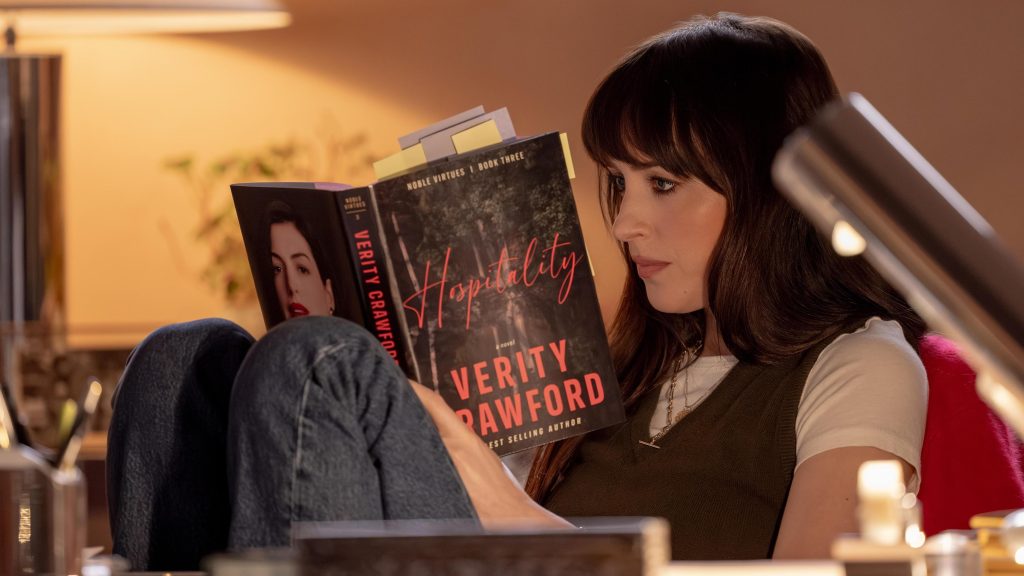
While searching through Verity’s files, Lowen discovers a manuscript that was never meant for publication. What she finds inside quickly becomes more important than the job she was originally hired to do.
Verity’s Manuscript Changes Everything
The manuscript is not connected to the book series Lowen is supposed to finish. Instead, it appears to be an autobiography written by Verity herself.
Inside its pages, Verity describes deeply personal details about her marriage to Jeremy, her feelings about motherhood, and several traumatic events involving the Crawford family. The material is disturbing, intimate, and difficult for Lowen to ignore.
As she continues reading, her perception of Verity changes. The manuscript seems to explain some of the family’s darkest moments, but it also creates even more questions.
That tension becomes one of the strongest parts of the book.
There Are Two Very Different Versions of Verity Crawford
One of the most important elements in Verity is the contrast between the woman Lowen sees and the woman described in the manuscript.
After her accident, Verity is physically weakened and requires constant care. She appears to have limited awareness of what is happening around her.
The woman described in the manuscript is completely different.
That version of Verity is intense, obsessive, and emotionally complicated. Some of the thoughts written in the manuscript are especially disturbing, which makes Lowen question everything she sees inside the Crawford home.
This leads to one of the book’s central questions: Who is the real Verity Crawford?
At certain moments, the answer seems obvious. Then new information appears and changes everything again.
Lowen Is Not a Completely Neutral Narrator
Most of the story is experienced through Lowen’s point of view, but that does not mean her interpretation is completely objective.
Lowen arrives at the Crawford home carrying her own personal problems. She also desperately needs the money from the job. Once she enters the house, she becomes surrounded by grief, secrets, and unanswered questions.
Things become even more complicated when she begins developing feelings for Jeremy.
The closer Lowen gets to him, the more personal reasons she has to distrust Verity. Because of this, readers are forced to question Lowen as well.
Is she uncovering the truth, or is she slowly starting to believe the version of events she wants to be true?
Jeremy Crawford Connects Lowen to the Mystery
Jeremy is Verity’s husband and the person who brings Lowen into the Crawford family’s life.
At first, their relationship is professional. Jeremy needs someone to finish his wife’s books, while Lowen needs the opportunity. Over time, however, that dynamic changes.
Lowen begins to know Jeremy on a more personal level. At the same time, she holds information about his marriage that he may not know.
The manuscript puts her in a difficult position. She can show it to Jeremy, or she can keep it hidden.
Both choices come with consequences.
Their growing attraction makes the situation even more complicated because it becomes harder to separate Lowen’s concerns from her own desires.
The Crawford Family Tragedies Are Essential to the Story
The Crawford family was already dealing with enormous pain before Lowen arrived.
Verity and Jeremy had three children: twin daughters Chastin and Harper, and their son Crew. Several tragic events involving the children become central to the mystery.
Lowen first learns about some of those events through Jeremy. Later, she discovers much darker versions of them in Verity’s manuscript.
She begins comparing what she knows with what Verity wrote.
At first, the pieces appear to fit together. However, in Verity, an explanation does not always mean the mystery has been solved.
Motherhood Is One of the Book’s Darkest Themes
Motherhood plays a major role in the novel.
The manuscript contains thoughts about Verity’s children that are uncomfortable and deeply disturbing. Colleen Hoover uses these passages to create a darker image of the character while also challenging the reader to decide how much of a private written confession should be believed.
The words could be interpreted as confessions. They could also represent fantasies, exaggerations, or something else entirely.
That uncertainty makes the scenes involving motherhood some of the most intense parts of the book.
The Crawford House Becomes Part of the Suspense
Much of Verity takes place inside the Crawford family home, and the location plays an important role in building tension.
Lowen sleeps there, works there, spends time with Jeremy, and watches Verity closely. Before long, she starts to feel that strange things are happening around her.
Small movements, sounds, and changes inside the house begin to seem suspicious.
The home stops feeling like a simple setting and becomes part of the mystery itself.
The isolated atmosphere also increases the feeling that Lowen is becoming too involved in a story that was never supposed to be hers.
Is Verity Really Unaware of What Is Happening?
As Lowen spends more time in the house, she starts to suspect that Verity may be more aware than everyone believes.
Certain moments seem difficult to explain.
A look, an unexpected movement, or an object that appears to have changed position can be enough to make Lowen suspicious.
None of these details clearly prove anything. However, they are also difficult to ignore.
This uncertainty turns ordinary moments into scenes filled with tension and encourages readers to watch Verity just as closely as Lowen does.
Romance Makes the Search for Truth Even More Complicated
Although Verity is mainly a psychological thriller, romance still plays an important role in the story.
Lowen and Jeremy begin growing closer while Verity is still living in the same house. Jeremy remains her husband, and Lowen is working with material created by Verity herself.
The situation becomes even more uncomfortable because Lowen has read extremely personal details about Jeremy and Verity’s marriage.
Their relationship becomes shaped by desire, guilt, secrecy, and moral conflict.
The more involved Lowen becomes with Jeremy, the harder it is to know whether her conclusions about Verity are completely unbiased.
Obsession, Desire, and Manipulation Are Everywhere
Obsession is one of the strongest themes in Verity.
It appears in romantic relationships, jealousy, writing, and the need to discover the truth.
Lowen begins the story searching for information about a series of books. Soon, however, she becomes completely absorbed in Verity’s personal life.
Every page of the manuscript creates another question.
Little by little, Lowen stops being just the writer hired to finish a series. She becomes part of the Crawford family drama.
The line between curiosity, obsession, and personal interest becomes increasingly difficult to see.
Verity Is Really a Story About Truth
The book’s title is closely connected to its biggest theme.
The word verity refers to truth, but truth is exactly what is hardest to find in this story.
Different characters present different versions of events. Memories can be unreliable, words can be interpreted in multiple ways, and even a written document does not automatically prove that something happened exactly as described.
That leads to one of the most important questions in the novel: What makes us believe something is true?
A written account can be a confession. It can also be fiction, a lie, or even a form of manipulation.
The book constantly moves between those possibilities.
The Ending Made Verity Even More Discussed
Without revealing major spoilers, the ending is one of the main reasons Verity continues to create debate among readers.
Just when the story appears to offer a final explanation, new information changes how earlier events can be understood.
Because of that, the novel does not end with a completely comfortable answer.
Instead, it leaves readers with another question.
That ambiguity has inspired countless theories about the characters and their motivations. Even after the final page, one question remains: Who should you believe?
From Colleen Hoover’s Book to the Verity Movie
The success of the novel eventually led to a film adaptation.
Anne Hathaway plays Verity Crawford, while Dakota Johnson stars as Lowen Ashleigh. Josh Hartnett plays Jeremy Crawford, completing the story’s central trio.
The movie is directed by Michael Showalter and keeps the book’s main elements, including the manuscript, Lowen and Jeremy’s relationship, and the mystery surrounding Verity.
However, the adaptation also includes changes created specifically for the screen. Some parts of the Crawford family story and Lowen’s background have been reduced or adjusted so the plot can work within a feature-length movie.
Anne Hathaway Has One of the Movie’s Most Important Roles
Verity is a particularly difficult character to adapt because much of what readers know about her comes from written material, memories, and Lowen’s interpretation.
In the movie, Anne Hathaway must turn those different versions of Verity into something visual.
That means small expressions, movements, and reactions could become especially important.
Readers who already know the book will likely pay close attention to those details while looking for clues about how the film interprets the character.
The Movie May Offer a New Perspective on the Book
Adapting Verity presents an interesting challenge because much of the suspense happens inside Lowen’s mind or through the manuscript.
A movie needs to turn those thoughts and written passages into scenes.
That also creates room for new interpretations.
Moments that depend on the reader’s imagination in the novel can become much more direct on screen. At the same time, performances can change the meaning of certain scenes.
Because of this, even people who already know the book’s ending may find new ways to interpret Verity, Lowen, and Jeremy.
Why Verity Appeals to Psychological Thriller Fans
Verity is especially appealing to readers who enjoy stories without easy answers.
The novel combines romance, suspense, family drama, and psychological tension while constantly encouraging readers to question the characters.
Its frequent revelations also help maintain a fast and engaging pace.
Still, the biggest strength of the book is uncertainty.
Questions remain even after the final page, which makes Verity the kind of story readers continue discussing long after finishing it.
Now, with the film adaptation arriving in theaters, the debate over who was really telling the truth is likely to begin all over again.
Verity opens in theaters on October 2, 2026.
Explore More Movies and Series Here on TVStreamzilla
Now that you know a little more about Verity, take the opportunity to explore everything TVStreamzilla has to offer. After all, if there is one thing we know how to do, it is recommend great content.
Related posts: