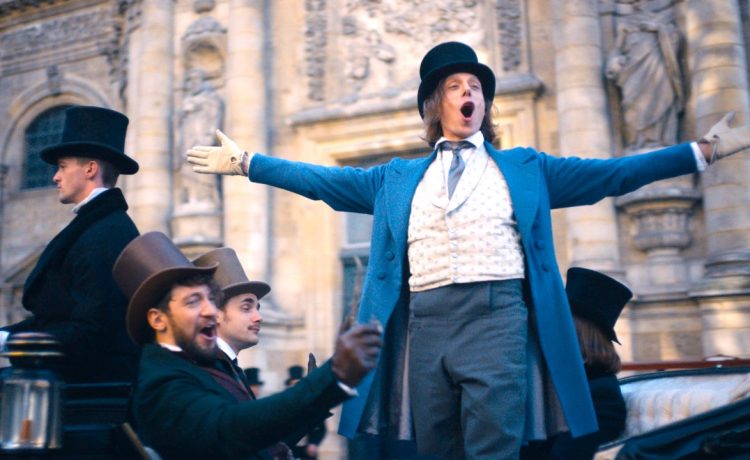

The life of Chopin has always felt like it was written as a dramatic score. After all, between passions, elegant salons, health struggles, and compositions that have crossed generations, the Polish composer became an almost cinematic figure long before cinema even existed. Therefore, it is no surprise that Chopin arrives in theaters with a story that feels both refined and deeply emotional.
The film follows Frédéric Chopin during a decisive moment in his career. Set in Paris in 1835, the story shows the musician moving through high society, giving concerts, teaching piano, and, at the same time, facing an illness that threatens to silence one of the greatest talents in classical music. As a result, the production does not focus only on portraying a brilliant artist; it also tells a story about urgency, desire, ambition, fragility, and legacy.
Moreover, the release comes at an interesting time for fans of biographical dramas. In recent years, stories about major names in music have gained strength on screen, especially because they combine personal drama, historical context, and memorable soundtracks. However, Chopin seems to follow a more elegant path. Instead of turning the composer into a pop-star figure, the film dives into the Parisian salons where art, politics, romance, and appearances often walked hand in hand.
Now playing in theaters

What is Chopin about?
The plot presents Chopin as an admired figure within the aristocratic circles of Paris. During the day, he gives lessons to support himself financially. At night, however, he attends parties, performs in exclusive spaces, and interacts with influential figures from the cultural and political elite. In this way, the movie creates an interesting contrast between the composer’s public brilliance and his private pain.
While receiving applause and recognition, Chopin must also deal with a progressive illness. Consequently, each composition gains even more emotional weight, as if time were running against him. This tension turns music into something more than beauty. It becomes urgency, memory, and a way to survive.
At the same time, the film explores important relationships in the artist’s life. Among them are his friendship with Franz Liszt and his bond with writer George Sand, two essential figures for understanding the cultural world in which Chopin lived. Therefore, the film is not limited to the piano. It also observes the composer within a network of affection, ambition, and conflict.
A biographical drama with a period atmosphere
One of the main attractions of Chopin is its setting. Paris appears as a living stage, filled with salons, elegant costumes, discreet conversations, and silent battles for prestige. Even so, the film does not seem interested only in showing beautiful scenery. On the contrary, the period atmosphere works as a reflection of Chopin’s own life.
After all, he was admired, but also under pressure. He was celebrated, although he remained vulnerable. He was seen as a genius, even though he still had to work, please patrons, and maintain his social position. Thus, the production builds a more human portrait of the composer, avoiding the temptation to turn him into an untouchable museum figure.
In addition, the direction embraces a narrative that combines drama, biography, and musicality. This can be especially appealing to viewers who enjoy historical films with emotion, but without losing visual elegance. In other words, this is the kind of movie that seems to ask for a dark theater, a large screen, and, of course, a good sound system.
Why watch Chopin in theaters?
Although many people prefer to wait for dramas to arrive on streaming, Chopin has everything to be better enjoyed in a movie theater. First, because Chopin’s music gains another dimension when heard with strong sound quality. Besides that, the recreation of 19th-century Paris may work much better on the big screen, especially for those who enjoy details in cinematography, costumes, and production design.
Another important point is the emotional tone of the story. Since the film follows an artist trying to create while feeling his own body begin to fail, the experience can become more immersive when watched without distractions. For that reason, seeing it in theaters may help the audience enter the rhythm of the story, without pausing, checking a phone, or missing small details.
And, let’s be honest, saying “I’m going to see Chopin at the movies” sounds much more sophisticated than “I’m just watching whatever is playing.” It is practically a cultural upgrade with popcorn included.
Now playing in theaters
Who is Chopin for?
The film should especially appeal to viewers who enjoy biographical dramas, period stories, and productions about great artists. Furthermore, it can be a strong choice for fans of classical music, particularly those who already know Chopin’s work and want to see a cinematic interpretation of his life.
However, even those who do not know much about classical music may connect with the story. That is because the film works with universal themes such as ambition, fear of death, passion, recognition, and the desire to leave something meaningful behind. In this way, Chopin stops being just a famous name in music books and becomes a character full of contradictions.
Still, it is worth adjusting expectations. Anyone looking for a fast-paced movie full of twists and big action scenes may not find that here. On the other hand, those who appreciate elegant, melancholic, and visually careful dramas will probably find plenty of reasons to add this release to their watchlist.
Chopin beyond the music
What makes Chopin so fascinating is the fact that his work remains alive after so much time. His compositions have crossed generations because they carry delicacy, intensity, and a deeply human vulnerability. For that reason, a movie about his life does not need only to present facts. It also needs to translate emotions.
In that sense, Chopin seems to search precisely for that balance. On one hand, it presents the composer’s historical and social environment. On the other, it attempts to capture the man behind the sheet music. As a result, the film may work both as an introduction for new audiences and as a fresh perspective for those who already admire the musician.
Additionally, its arrival in theaters creates a good opportunity to rediscover Chopin outside concert halls. In the end, cinema has that curious power: it turns familiar names into emotional experiences. And when that works, even someone who has never sat down to listen to an entire nocturne may leave the theater wanting to learn more about the composer.
Is Chopin worth watching?
Yes, especially if you enjoy movies that combine art, history, and emotion. Chopin arrives in theaters with a proposal aimed at viewers looking for a more contemplative, yet still engaging, experience. In addition, the production has strong ingredients to attract both fans of cinematic biographies and viewers interested in period dramas.
Therefore, if you want to watch a movie about genius, passion, and fragility, this may be a great choice for your next trip to the cinema. After all, few stories fit the big screen as well as that of an artist trying to transform pain into beauty.
Explore More Movies and Series Here on TVStreamzilla
Now that you have learned a little more about Chopin, take the opportunity to explore everything TVStreamzilla has to offer. After all, if there is one thing we know well, it is how to recommend great content.
Related posts: